
A Legacy in Colour and Batik
THE BATIK WORLD OF KHALIL IBRAHIM
Born in 1934 in Kubang Kerian, Kelantan, Khalil Ibrahim emerged from humble beginnings to become one of Malaysia’s most influential modern artists. From an early age, he displayed remarkable talent, sketching and crafting makeshift puppets from leaves and cardboard. Recognized for his potential, he received a Pahang state scholarship that allowed him to study at Central Saint Martins College of Art and Design in London in the 1960s.
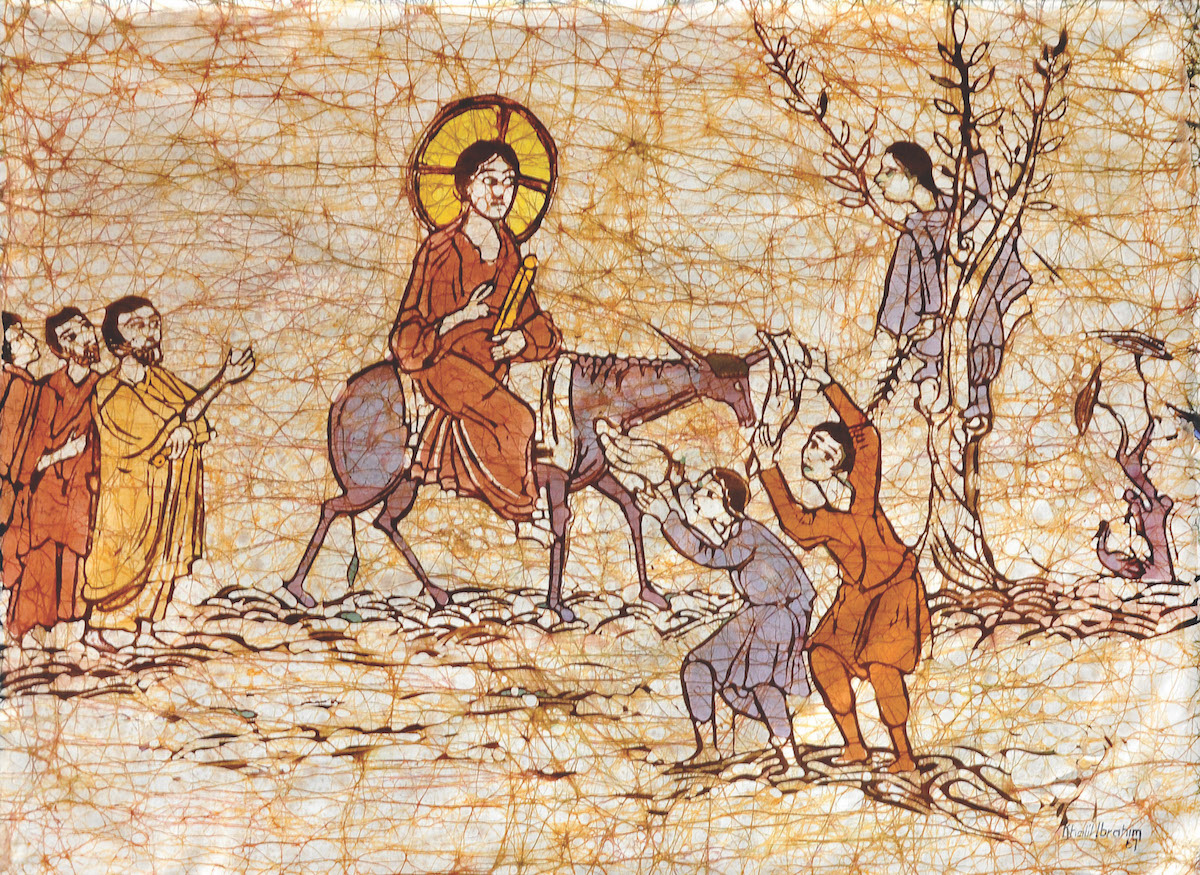
Among Khalil Ibrahim’s most discussed, highly anticipated, and at times controversial works is Palm Sunday. Created after his formative travels to Italy with his beloved wife, the painting reveals how deeply the artist was moved by the country’s artistic heritage and spiritual atmosphere. These experiences informed his bold decision to explore a Christian theme, an uncommon subject within the context of Malaysian modern art and one that placed the work at the centre of critical debate.
Palm Sunday portrays Jesus’ triumphal entry into Jerusalem, an episode recounted in all four canonical Gospels and traditionally celebrated as the beginning of Holy Week. Through the medium of batik, a technique closely associated with Southeast Asian visual culture, Khalil offers a unique, cross cultural interpretation of a well known biblical narrative. Jesus is depicted riding a donkey, an Eastern symbol of peace and humility, which stands in deliberate contrast to the Western association of horses with military might and conquest. This juxtaposition reinforces the spiritual tone of the scene, a king who arrives not with force but with compassion.
One of the most compelling details is the inclusion of Zachaeus. According to the Gospel of Luke, Zachaeus, a tax collector of short stature, climbed a sycamore fig tree to catch a glimpse of Jesus above the crowds lining the streets.
The presence of Zachaeus reveals the artist’s meticulous attention to narrative specificity, an indicator that his engagement with the Gospel accounts was not superficial but thoughtful and informed. It also adds a dynamic vertical element to the composition, balancing the horizontal movement of the procession and drawing the viewer’s eye across multiple layers of meaning.
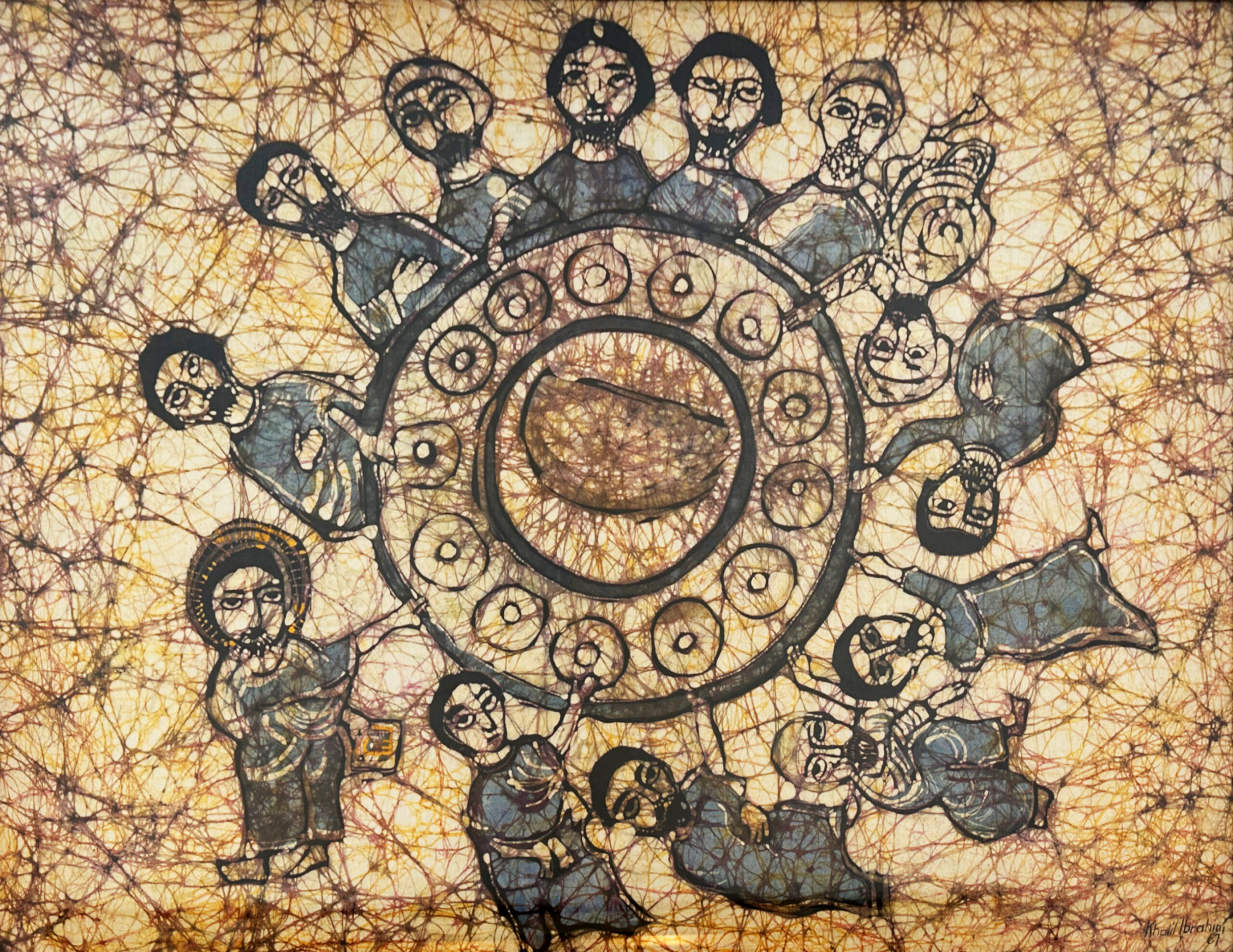
Khalil Ibrahim’s exploration of religious themes extended beyond Palm Sunday, and one of the most striking examples is his evocative batik work titled “Sa Sudah Makan – The Last Supper”. This piece reinterprets one of the most iconic scenes in Christian art through the lens of Southeast Asian batik tradition, resulting in a work that is both visually compelling and culturally provocative.
Created with meticulous wax-resist techniques, the artwork features Jesus and his disciples arranged around a central
Batik 88 x 95 cm
circular table, rendered in expressive lines and textured layers that almost resemble ancient parchment. The figures, stylised and deeply emotive, reveal Khalil’s fascination with human expression, community and storytelling. The title, which loosely translates to “Have You Eaten?”, injects a distinctly local sensibility, anchoring the spiritual narrative within everyday Malaysian culture.
By the mid-20th century, batik in Malaysia had evolved from a textile craft into a medium for fine art. Khalil Ibrahim elevated it further, using batik not merely as decorative cloth but as a canvas for figurative storytelling.
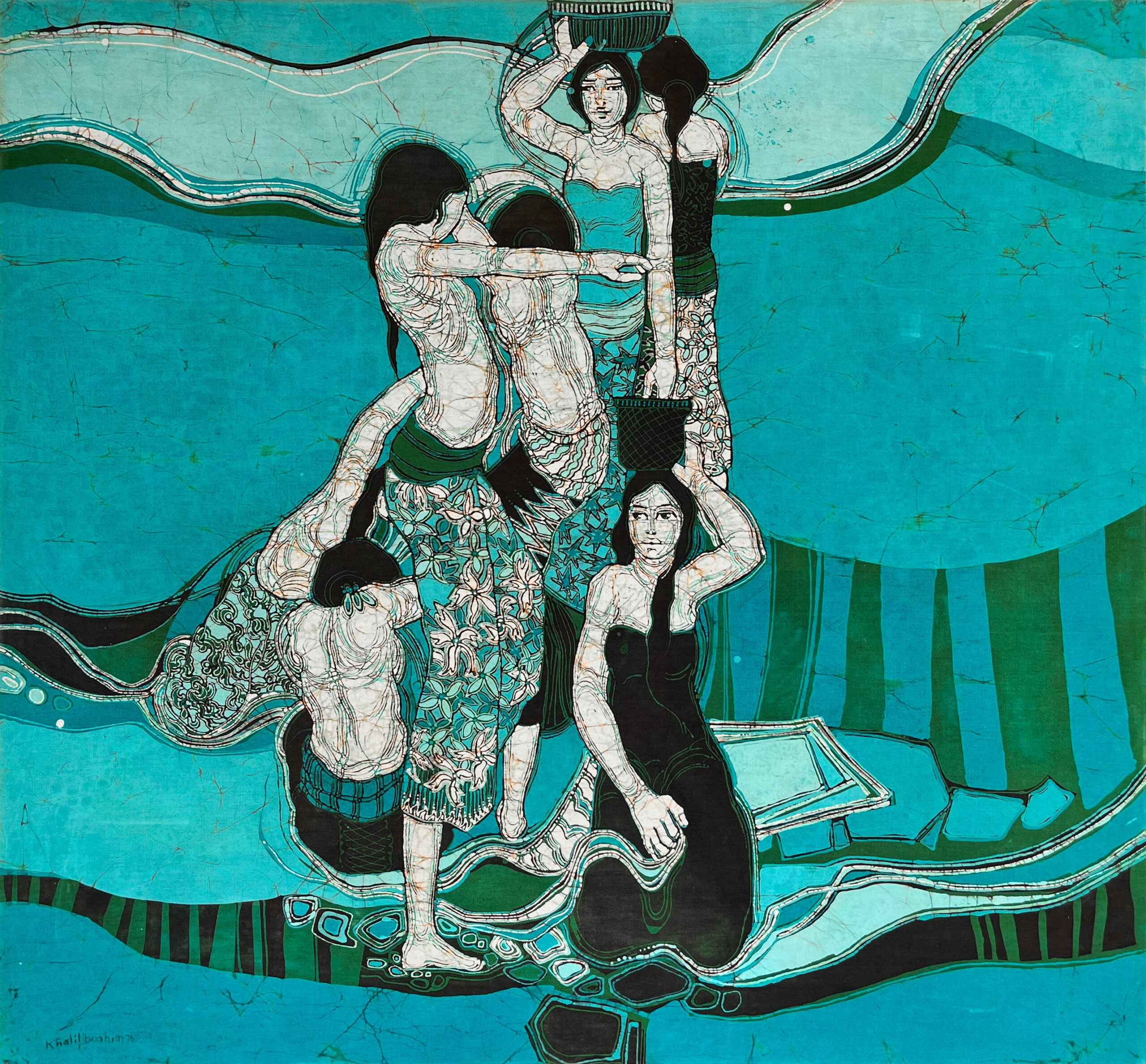
His tools tjanting, wax resist, and dyes became extensions of his painter’s palette, allowing human figures, village scenes, and coastal women to emerge in expressive strokes and layered colours. Through these works, he captured both the physical world and the spirit of Malay rural life.
Batik 60 x 89 cm
Though trained abroad, Khalil remained deeply tied to his Kelantanese upbringing. His batik works often depicted fishermen, village dwellers, and women in sarongs, portraying everyday life along Malaysia’s East Coast.
Signature pieces like East Coast Ladies showcase graceful silhouettes of women against muted backgrounds, conveying quiet dignity, femininity, and cultural essence.
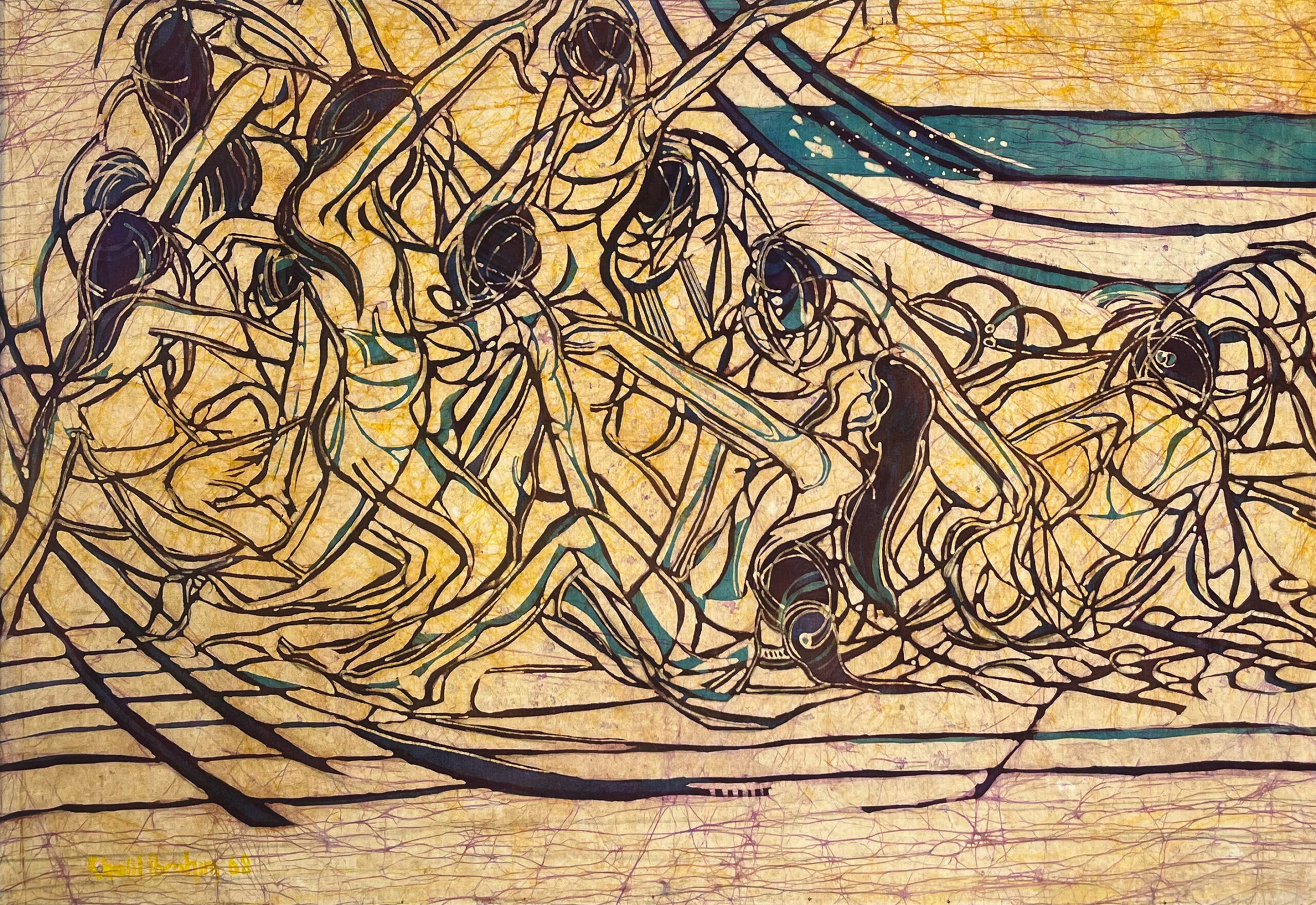
Other works, such as Movement in Red, explore the human form boldly, celebrating contours and dynamics with vivid colour contrasts while reflecting his fascination with human movement and expression. Through batik, Khalil told stories of labour, livelihood, tradition, and identity, creating timeless images of a vanishing way of life.
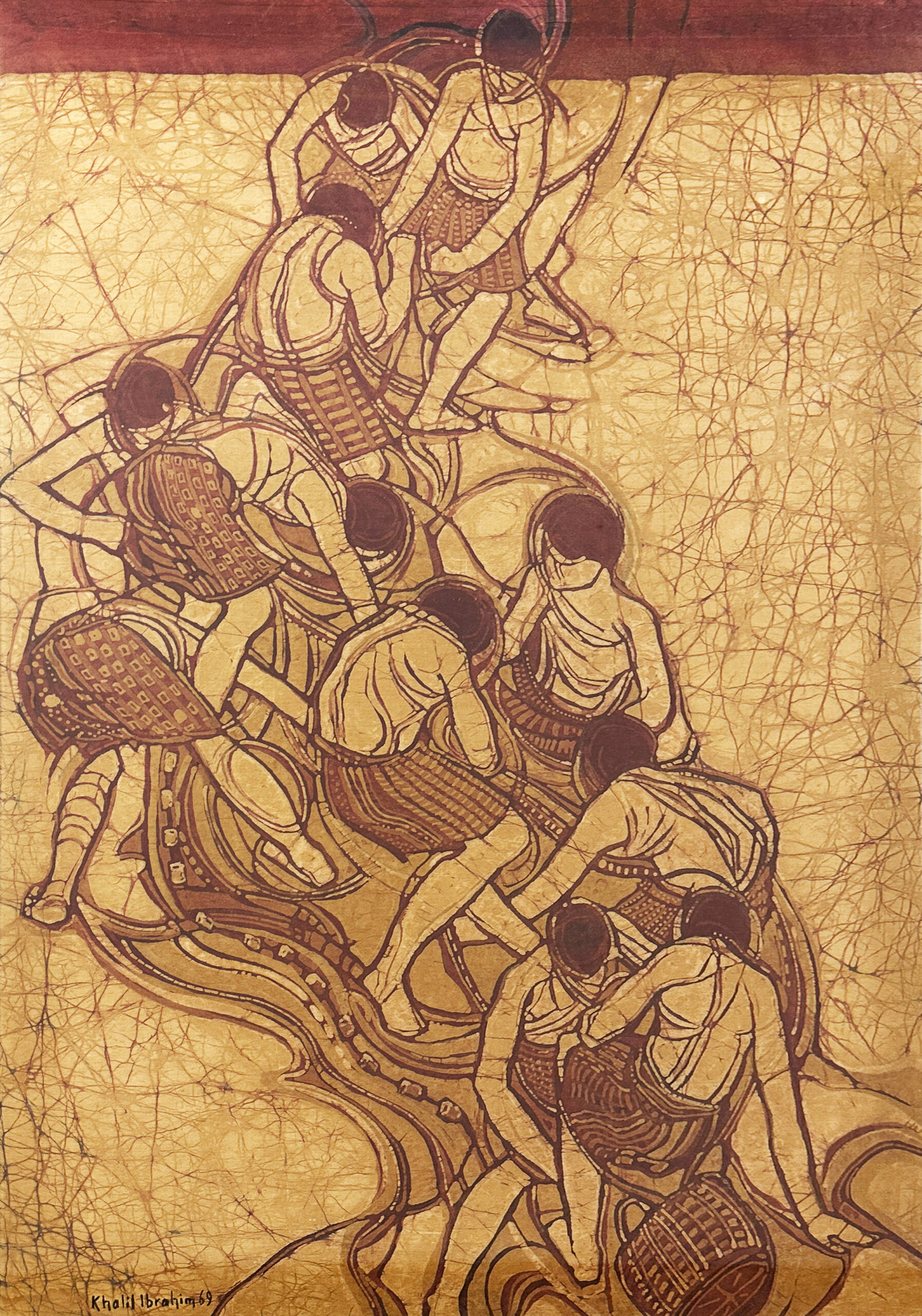
Batik 82.5 x 57 cm
Khalil Ibrahim was not defined solely by batik, although it remained a defining medium. His versatility extended across watercolor, ink, acrylic, oil, and drawing, allowing him to navigate figurative realism, abstraction, evocative landscapes, and expressive portraits.
After studying in London, he experimented with abstraction in works such as Destruction and Abstract I, reflecting modernist influences while maintaining his unique vision.
Yet, throughout all experimentation, his East Coast heritage remained central, grounding his work in Malaysian culture and providing a bridge between the personal, the national, and the universal. His ability to merge worlds traditional Malay culture and Western art education resulted in a style both uniquely Malaysian and globally resonant.
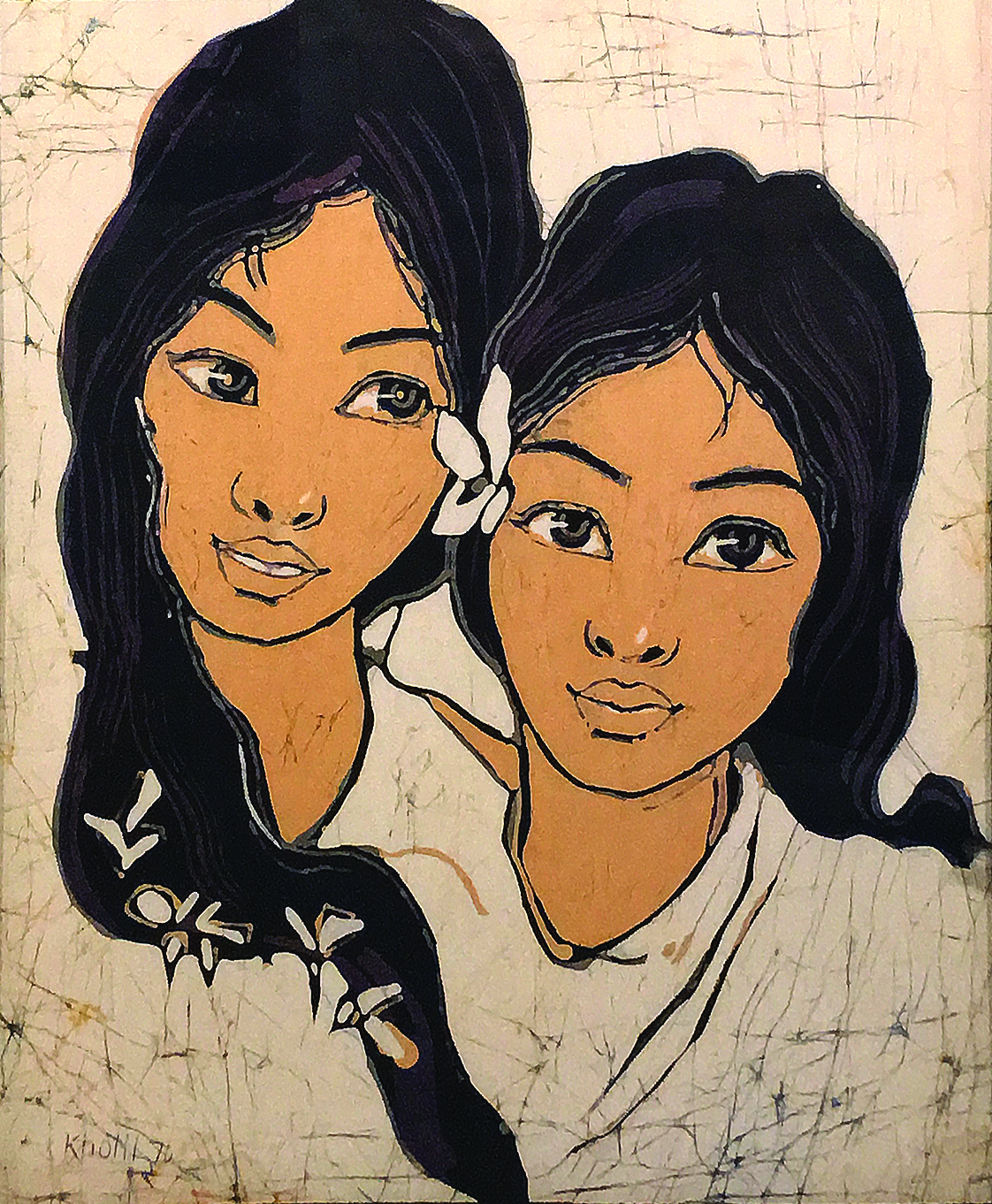
Batik 51 x 42 cm
Khalil Ibrahim elevated batik to fine art, documenting a disappearing way of life while inspiring generations of artists.
His paintings preserve the memory of coastal villages, fishermen’s daily routines, and East Coast communities during a time of rapid modernization. Owning a piece by Khalil Ibrahim is akin to holding a fragment of Malaysian history.
Each brushstroke, layer of dye, and human figure carries stories of Kelantanese childhood, coastal breezes, village life, and the artist’s devotion to craft and identity. Although Khalil passed away in 2018, his art remains vibrant and evocative.
His batik works, in particular, stand as a bridge between tradition and modernity, memory and artistic expression, offering viewers timeless windows into a world both familiar and wistful. For anyone drawn to culture, heritage, and fine art, the batik universe of Khalil Ibrahim is not just worth exploring it is essential.
The Rooster by Lee Man Fong
A MASTERPIECE OF POETIC GRACE AND CULTURAL RESONANCE

Lee Man Fong stands as one of the most culturally significant and visually poetic artists to emerge from Southeast Asia in the twentieth century. Born in Guangzhou in 1913 and later becoming a central artistic figure in the Malay Archipelago, his life and work reveal an extraordinary synthesis of influences that crossed continents and traditions.
He was an artist shaped by migration, displacement, and opportunity, and his personal story unfolded across China, Singapore, Indonesia, and Europe, ultimately resulting in a distinctive artistic vocabulary that resonated deeply with audiences in both the East and the West.
From an early age, Lee Man Fong exhibited remarkable talent. After relocating to Singapore and eventually to Batavia, now Jakarta, he entered the vibrant multiethnic cultural environment that defined the artistic identity of the region.
His early participation in the Batavia Art Circle allowed him to refine his skills and engage with artists who were breaking new ground in the visual language of the Malay world.
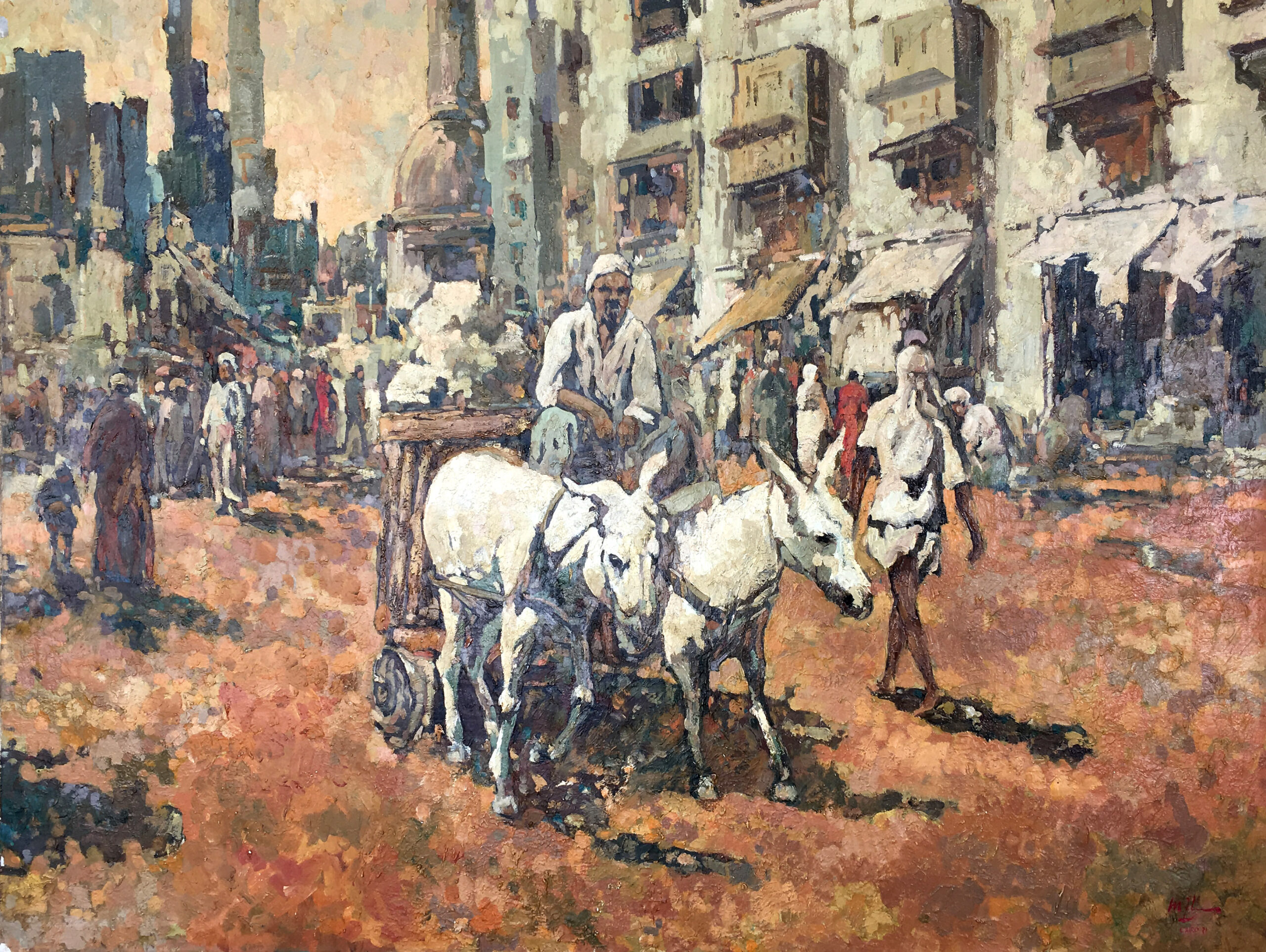
Oil on canvas 95.5 x 127 cm
A pivotal moment arrived in 1947 when the Dutch colonial government awarded him a prestigious scholarship to study in the Netherlands. This period in Europe transformed him profoundly.
He absorbed the harmony, nuance, and atmospheric realism of Dutch and European painting, particularly the refined handling of light and tonal gradation. What emerged upon his return to Indonesia was not merely the work of a technically accomplished painter but that of an artist who had learned to merge the meditative spirit of Chinese brushwork with the sculptural depth and realism of European oil technique.
This fusion made Lee Man Fong a central figure in the development of modern art in the Malay Archipelago.
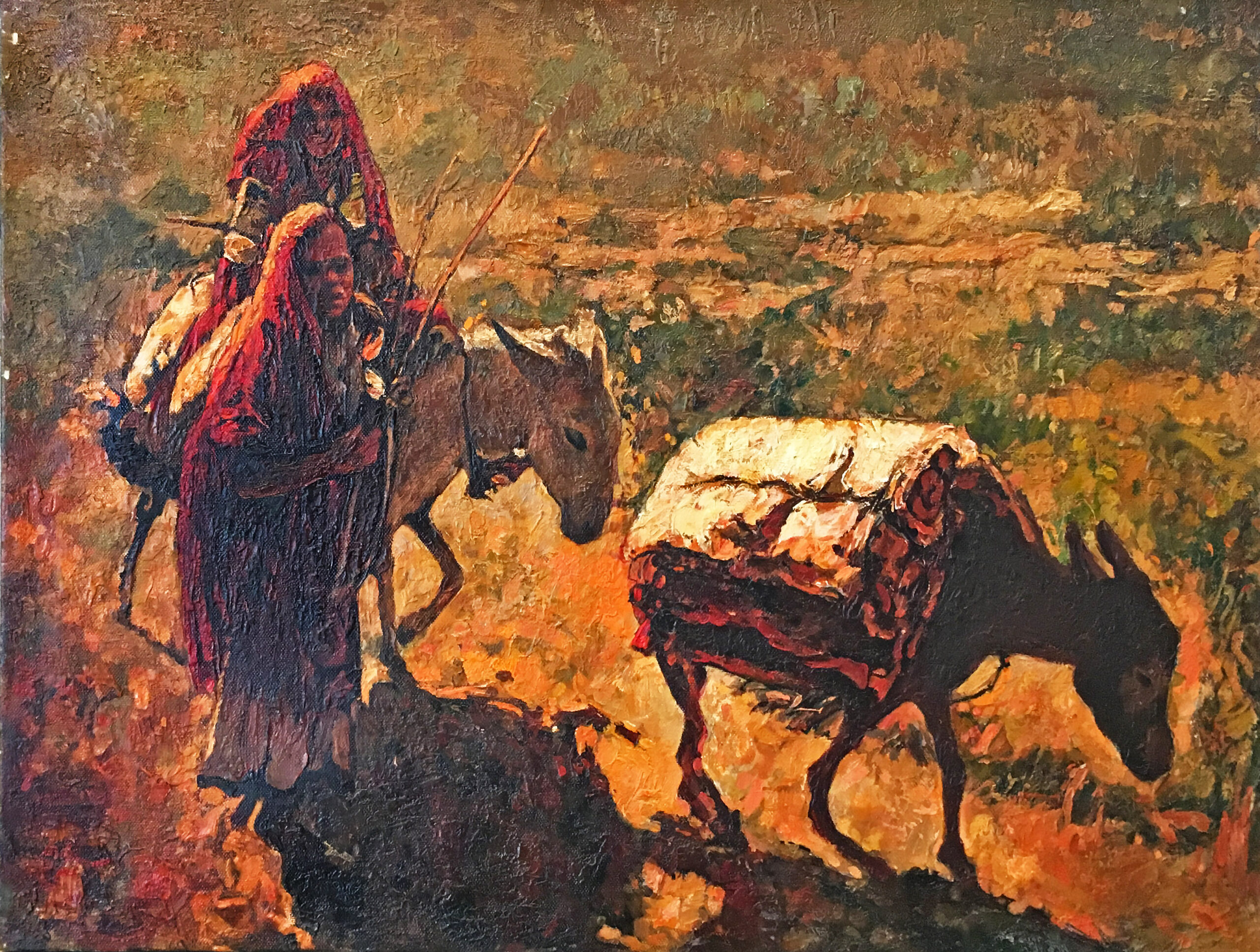
Oil on canvas 62 x 82 cm
His mastery of this hybrid style captivated the attention of collectors, critics, and political leaders alike. President Sukarno, an avid supporter of the arts, recognized his exceptional talent and appointed him as an official palace painter and cultural advisor.
Through this patronage, Lee contributed to the visual identity of the newly independent Indonesia and curated artistic narratives that shaped national taste and pride.
At the same time, through his involvement with the Yin Hua Art Association, he played an essential role in nurturing Chinese Indonesian artistic expression during a period of profound cultural change. Within this broad and influential oeuvre, the rooster occupies a deeply meaningful place. It is one of Lee Man Fong’s most iconic subjects, not merely for its visual appeal but for the symbolic power embedded within it.
In Chinese cultural tradition, the rooster represents prosperity, vigilance, and authority.
It is an emblem of awakened clarity, an animal that breaks the silence of night and announces the arrival of dawn.
In the philosophy of Feng Shui, which permeates much of the cultural landscape of the Malay world, the rooster is believed to protect against conflict, deceit, and harmful gossip.
It symbolizes fidelity in relationships and courage in facing adversity. Lee understood these connotations intuitively, and his roosters carry an emotional and philosophical presence that elevates them beyond naturalistic depiction.
The present masterpiece reveals this depth of understanding with exceptional clarity.
The rooster stands confidently upon a textured stone, its body angled in a proud, upward movement, while its head is lifted toward an unseen horizon as if caught mid call. The composition captures a moment that is both energetic and serene.
The gesture of the bird is poised between stillness and motion, and its expressive posture suggests the first call of morning and the promise of awakening.
The tail feathers are rendered with sweeping arcs that echo classical Chinese ink calligraphy, yet the body possesses the fullness and weight of European realism.
This duality, achieved with sophistication and subtlety, is a hallmark of Lee’s mature style. The palette of the painting reveals another layer of the artist’s refinement.
The vibrant red of the comb and wattle glows with life and authority. Subtle transitions of metallic greens, ochres, and blues shimmer across the feathers, recalling the delicate variations of light found in European naturalist painting. The deep blacks of the tail are layered with expressive brushwork that gives the feathers both volume and movement.
These elements rest against a background that evokes the warm tonality of aged parchment, allowing the rooster to emerge with luminous presence. The bamboo behind the rooster is rendered with elegance and restraint. It introduces a symbolic counterpoint that enriches the composition. Bamboo is associated with integrity, resilience, and moral uprightness.
These qualities echo the dignified bearing of the rooster and create a harmonious dialogue between foreground and background.The soft washes and gentle verticals of the bamboo contribute to the contemplative mood of the work, balancing the power of the central figure with reflections of grace and endurance.
It is within this synthesis of cultural symbolism, painterly refinement, and emotional presence that the beauty of the rooster painting becomes fully apparent. Lee Man Fong’s mastery lies not only in his technical accomplishment but in his ability to infuse even the simplest subjects with a sense of narrative and psychological resonance.
The rooster becomes a guardian figure, a symbol of clarity and strength, a creature imbued with dignity and life. It evokes the sound of morning, the promise of renewal, and the watchful vigilance that lies at the heart of many Southeast Asian cultural values.
The Malay Archipelago embraced Lee Man Fong’s art precisely because of this capacity to elevate everyday themes into images of poetic beauty. His depictions of village life, animals, dancers, and natural scenes spoke to viewers with a sense of familiarity and cultural intimacy. Yet these same works possessed a refinement that aligned them with the European artistic tradition. It was this delicate balance that made his paintings admired in Indonesia, Malaysia, Singapore, and Brunei, where communities with deep Chinese and Malay heritage found resonance in his symbolism and technique. His success in Europe grew from similar reasons. European collectors saw in his work a unique marriage of Eastern spirituality and Western pictorial structure, a combination that felt both exotic and classically disciplined. Exhibitions in the Netherlands and across other European cultural centers received enthusiastic praise and reinforced his position as an artist of transcontinental significance. This rooster painting stands as a vivid testament to Lee Man Fong’s extraordinary ability to bridge cultures and artistic philosophies.It reflects the full maturity of his style, a union of refined technique and profound symbolic intention.
Its beauty lies in its harmonious composition, luminous color, expressive brushwork, and the emotional energy that radiates from the poised figure of the rooster. The work captures not only the physical presence of the animal but the spirit, nobility, and cultural richness it represents. In the world of collectors and connoisseurs, works such as this are recognized as among the most eloquent expressions of Lee Man Fong’s artistic genius. They stand at the intersection of history, philosophy, and aesthetic mastery. They remind us of the enduring power of art to transcend borders and generations. The rooster, in this magnificent rendering, becomes not only a creature of dawn but a symbol of the artist himself, announcing a new vocabulary of beauty, clarity, and cultural harmony that continues to resonate with global audiences today.