
Datuk Ibrahim Hussein
THE GENESIS OF A MODERN MALAYSIAN VISIONARY
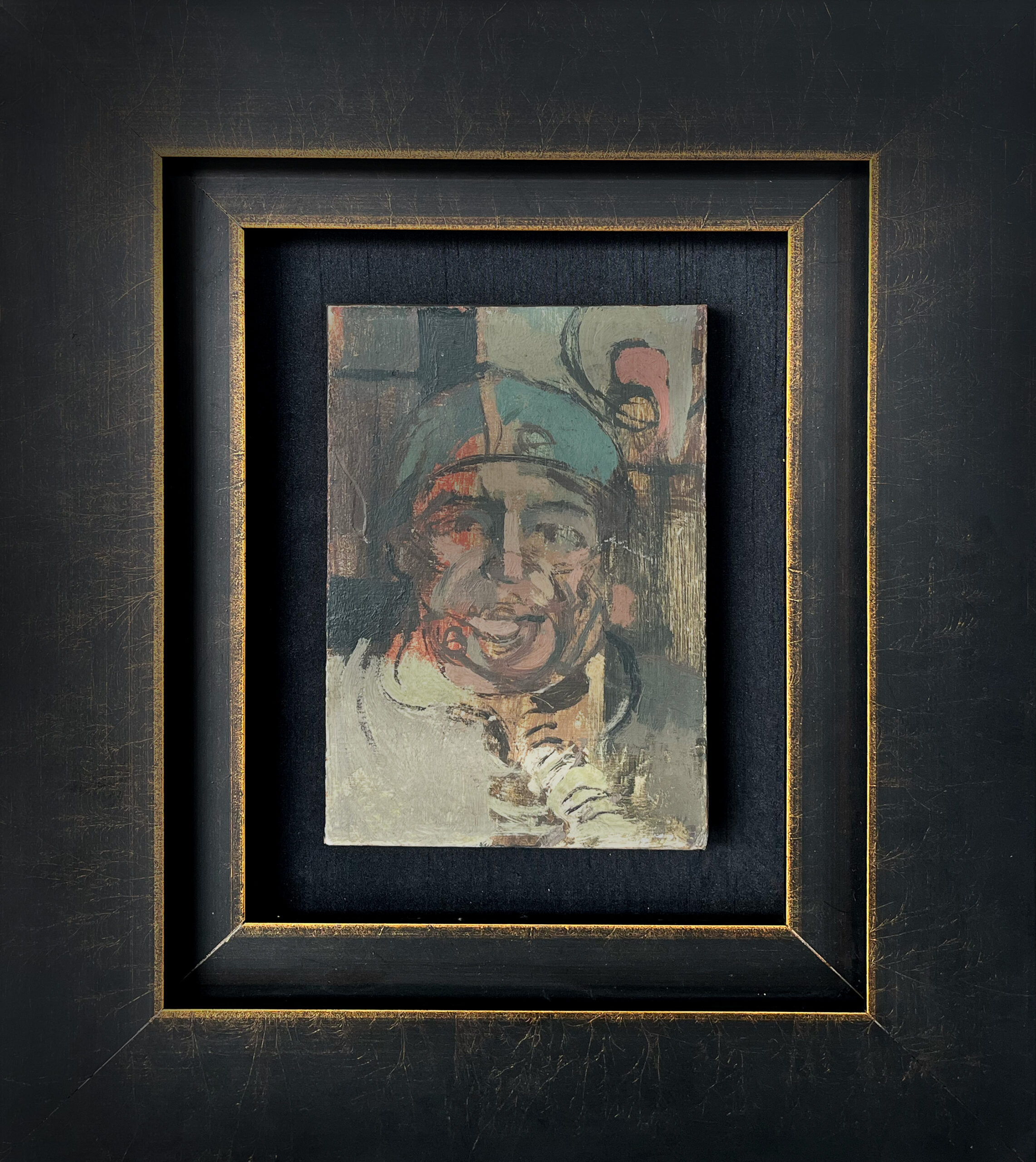
The Early Awakening of an Artist
Datuk Ibrahim Hussein (1936–2009) is one of the most celebrated figures in Malaysian modern art, a visionary whose works embody intellectual rigor and emotional intensity. Born in Sungai Limau Dalam, Kedah, Ibrahim grew up surrounded by paddy fields, rural rhythms, and the simplicity of village life.
These early surroundings would later manifest in his deep sensitivity to human emotion and social reality. His early works reveal an artist in the process of discovering his voice, yet they already carry the hallmarks of his mature vision: the vitality of line, the harmony of form, and the relentless pursuit of motion in stillness.
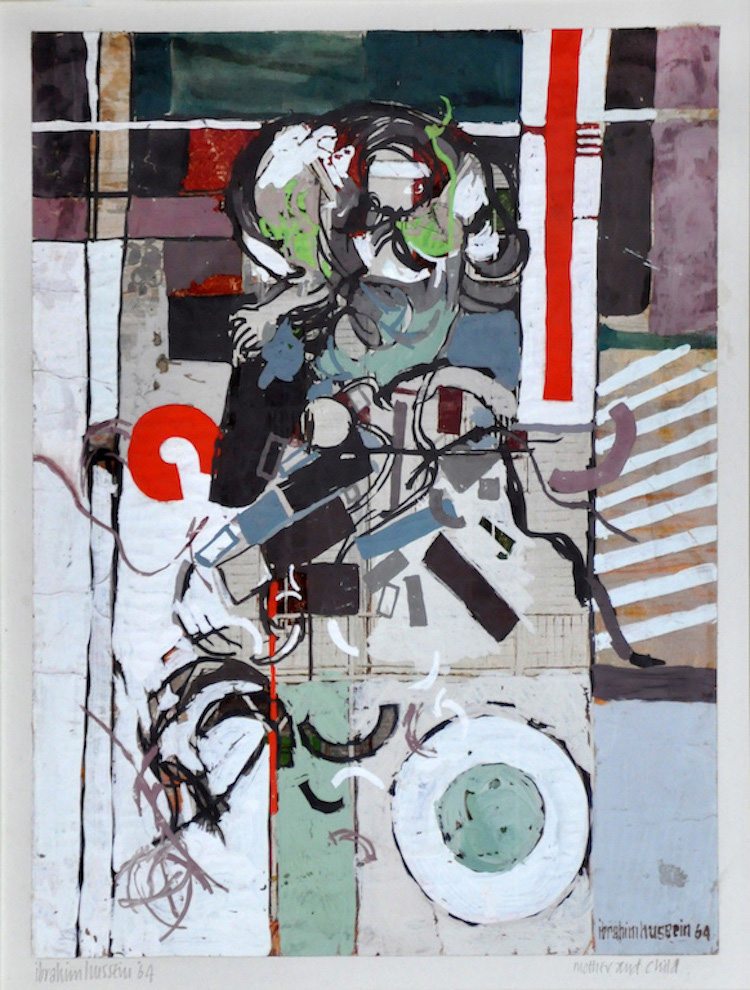
Gouache on magazine page 33 x 25 cm
During the 1950s, Ibrahim Hussein studied at the Nanyang Academy of Fine Arts in Singapore, where he was exposed to the foundations of modernist thought and the freedom of artistic experimentation. It was at Nanyang that he began to see art not merely as representation but as translation and interpretation of life, energy, and emotion.
His early paintings and sketches from this period often revolved around the human figure, showing people in quiet moments of resilience, love, or contemplation. These works reflected not only a personal sensitivity, but also a young nation’s awakening spirit in the years following independence.
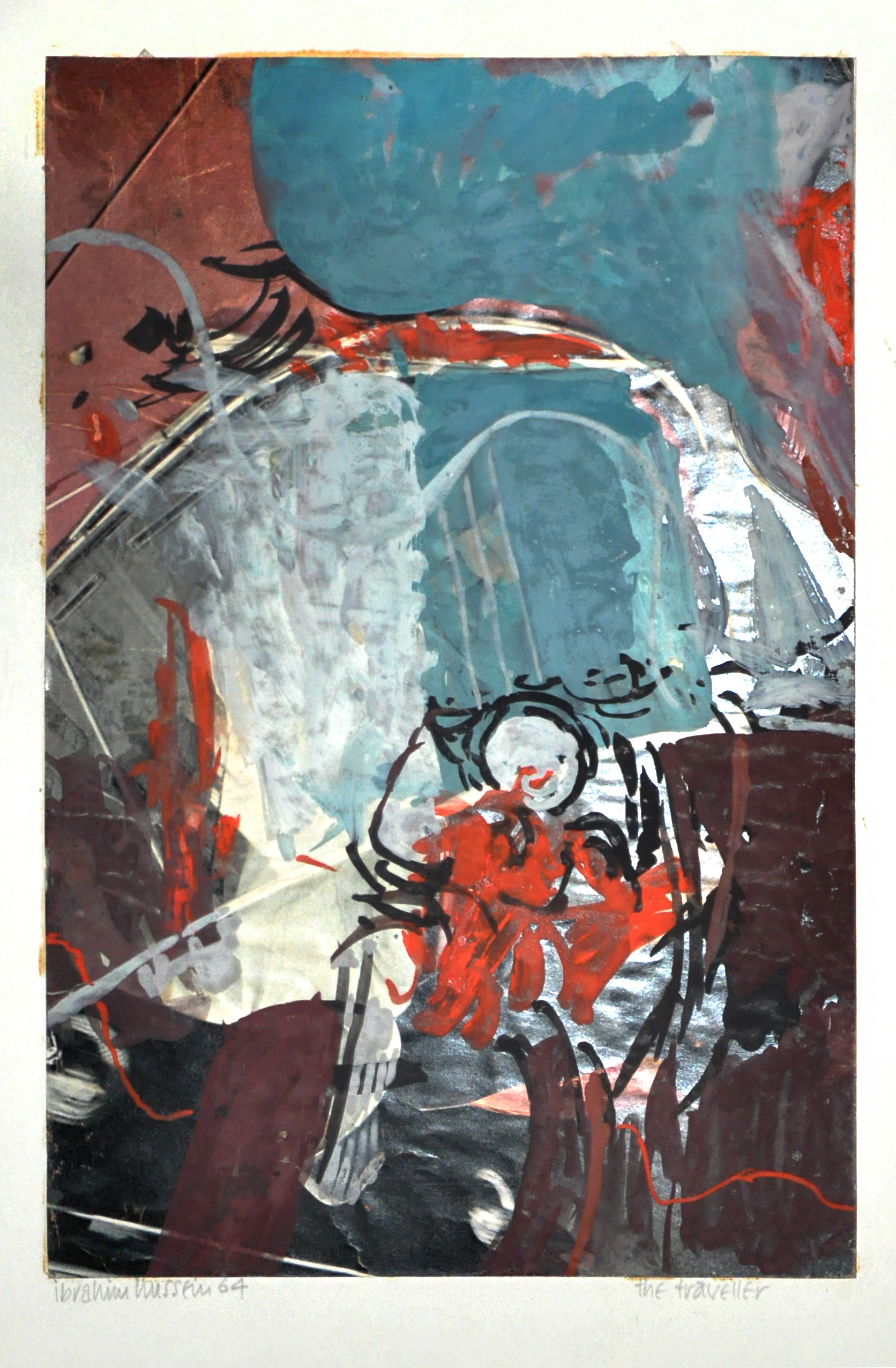
Gouache on magazine page 29 x 19 cm
Humanity in Line: Figurative Beginnings
Ibrahim Hussein’s early works are remarkable for their simplicity of composition and emotional depth. Among his most notable early paintings is Mother and Child (1964), a work in gouache on a magazine page. Here, Ibrahim Hussein portrays a tender moment of affection and connection between mother and child using minimal lines yet profound expression.
The juxtaposition of paint on printed media suggests the coexistence of the private and public realms, intimacy against the backdrop of modern society. This was a visual metaphor for Ibrahim’s own life, balancing personal emotion with an expanding awareness of the world around him.
Another important work, The Traveller (1964), also executed in gouache on a magazine page, presents a solitary figure set against fragmented space. The piece speaks to themes of solitude, displacement, and spiritual journey, mirroring the artist’s own path of exploration. The economy of line and the subtle use of negative space reveal an early mastery of rhythm and composition. In these early figurative works, Ibrahim was already discovering his unique ability to capture life through the simplicity of gesture and form.
Homage (1964): A Tribute to Spirit and Structure

Oil on canvas 126.5 x 101 cm
Homage (1964) marks a turning point in Ibrahim Hussein’s artistic evolution. Executed in gouache and collage, the painting captures his transition from realism to abstraction while retaining his emotional connection to the human experience. The composition is rhythmic and layered, its visual harmony emerging through the interplay of structure and spontaneity. In this work, Ibrahim pays tribute to artistic form and the spiritual energy that animates it. The boldness of line and geometric rhythm represent not only the motion of life but also, the artist’s internal dialogue between intellect and intuition.
Through Homage, Ibrahim reaffirms his conviction that art is not merely a visual pursuit but an act of reverence for form, emotion, and the creative spirit itself. The work reflects his understanding of painting as a discipline and devotion, where every line and curve becomes a gesture of respect toward the language of abstraction.
In this piece, Ibrahim begins to articulate a philosophy that would define his later career: abstraction, far from being detached or cerebral, can express the full depth of human feeling. Within his precise geometry lies warmth, rhythm, and a quiet pulse of emotion, revealing his belief that structure and sensitivity are not opposites but partners in artistic truth.
The Rumble Series: Energy in Motion
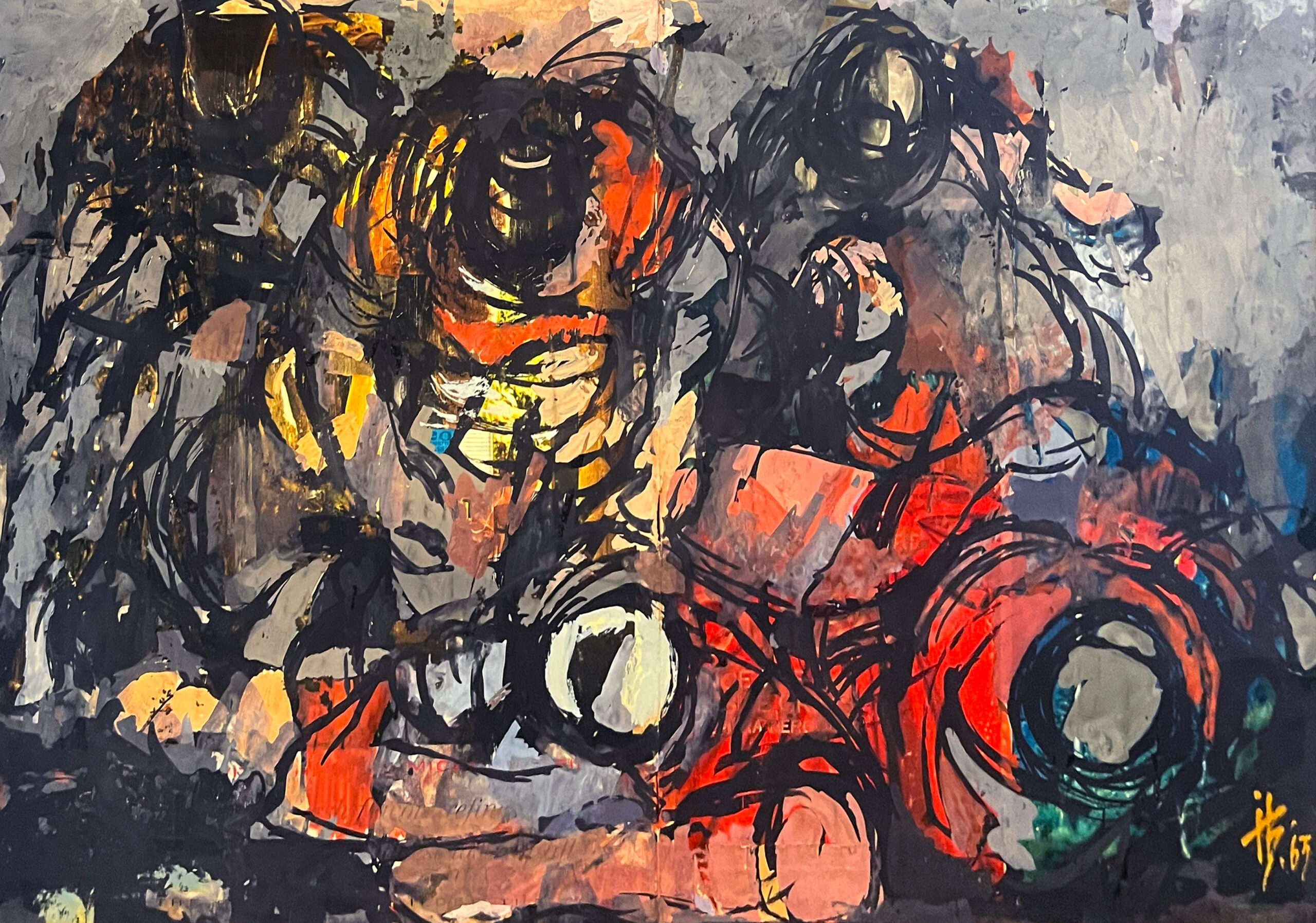
Among Ibrahim’s most dynamic early explorations of movement and rhythm is the Rumble Series, created in the mid 1960s.
In these works, Ibrahim channels the raw vitality of human and cosmic motion, using interlocking lines, bold color fields, and layered textures to create a sense of continuous energy.
The Rumble Series captures his fascination with the invisible forces that shape existence, energy as something physical and spiritual, measurable yet deeply mysterious.
Each canvas seems to breathe and tremble with its own rhythm, as if charged by an unseen current.
In these works, Ibrahim abandoned the literal figure entirely, replacing it with motion itself. Lines crash, overlap, and dance across the surface, evoking the pulse of life, the movement of crowds, or the rhythms of the natural world.
The Rumble Series also anticipates his later innovation known as “printage”, where he would combine collage, printing, and painting to convey the dynamism of modern existence.
Through this series, Ibrahim established his reputation as Malaysia’s “Painter of Motion”, a title that perfectly captured his lifelong pursuit of translating the invisible energy of life onto canvas.
The Path Toward Abstraction
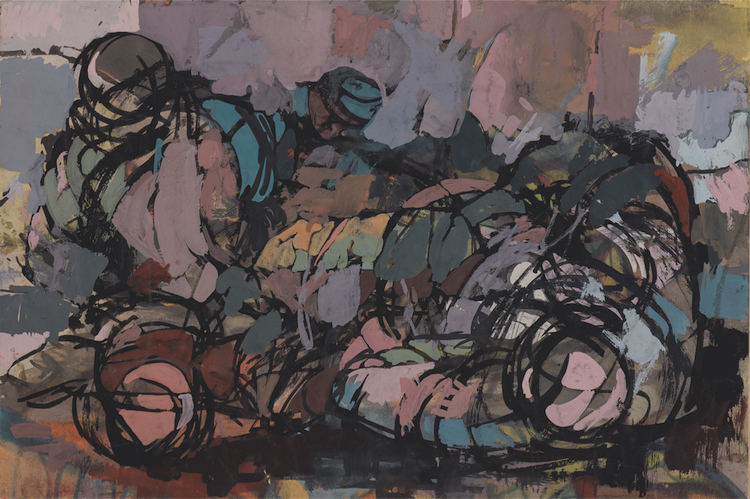
By the early 1960s, Ibrahim was refining his abstract language through bold experimentation with materials, forms, and spatial relationships. In Untitled (1963), created with acrylic ink and collage on card, he began to move decisively away from representation, allowing the human figure to fragment and merge into a network of geometric patterns and overlapping planes. The composition carries a sense of controlled chaos, where precision and spontaneity coexist, revealing his growing mastery of rhythm, balance, and visual tension.
His incorporation of collage elements and printed paper introduced new layers of meaning and texture, linking fine art with the immediacy of contemporary media.
Through this fusion, Ibrahim blurred the boundaries between high art and popular culture, infusing his work with intellectual rigor and visual immediacy.
This approach became a hallmark of his practice, reflecting his belief that art could exist in dialogue with the modern world while remaining deeply personal and poetic.
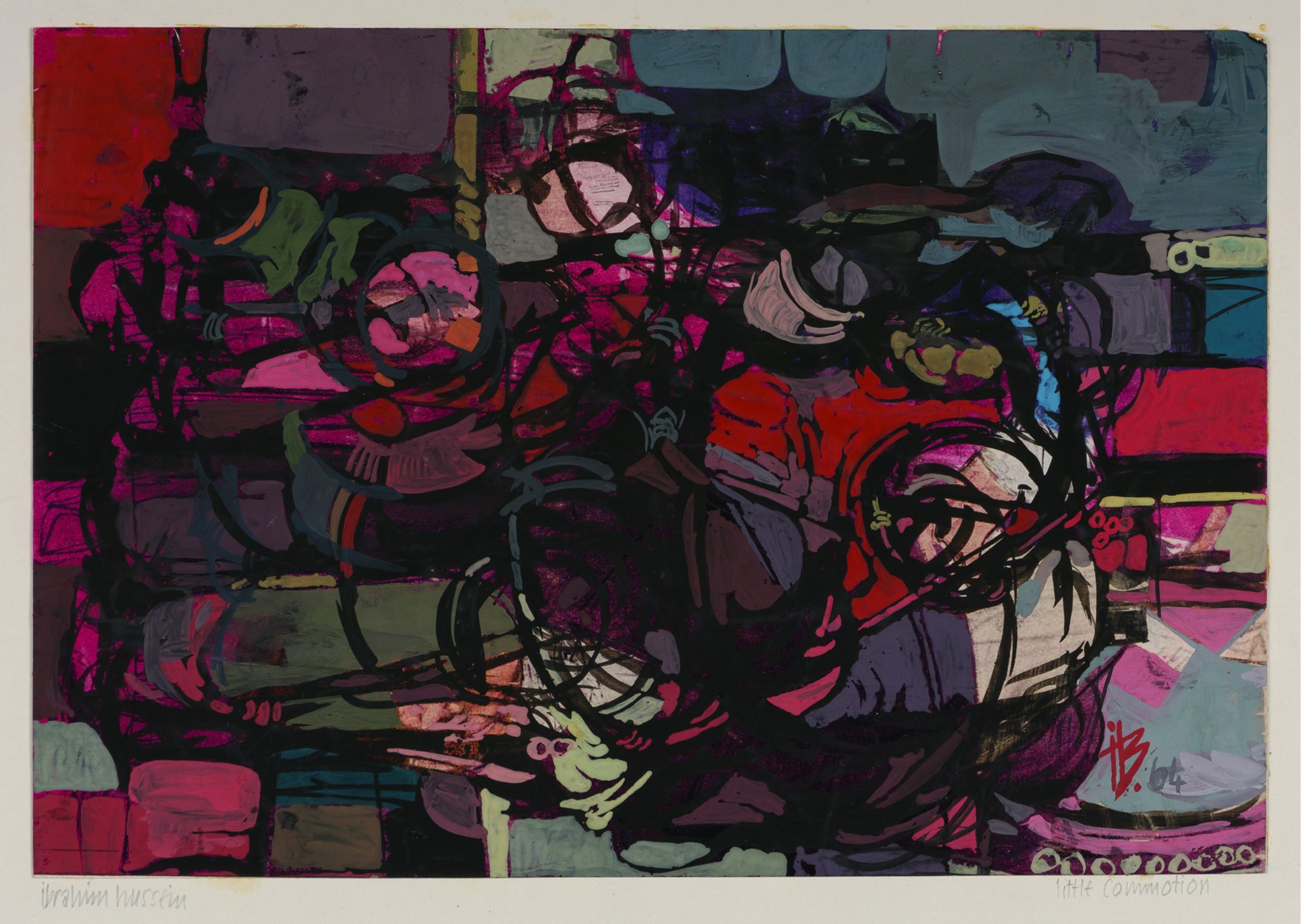
In Little Commotion (1964), Ibrahim translates pure energy onto the surface, using overlapping strokes, angular shapes, and shifting tones to create a composition that seems to hum with motion.
The work radiates a sense of vibration, as if the lines themselves are alive, echoing sound, light, and rhythm in visual form.
Through this painting, Ibrahim explores his belief that art is not a static object but an active extension of movement, a visual record of energy in flux.
Man and His Possessions: The Human Condition
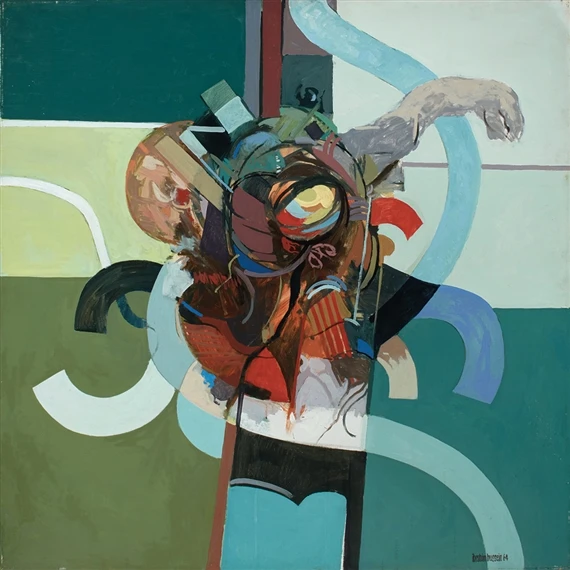
Man with Possessions (1964) stands as one of Ibrahim’s most introspective works from this period, offering a layered commentary on the human condition in an age of material pursuit. In this oil painting, a solitary figure occupies the center of a fragmented space, surrounded by abstracted forms that evoke the symbols of ownership and accumulation. Yet, rather than suggesting comfort, these forms seem to close in on the figure, creating a sense of isolation within abundance.
The muted palette, restrained brushwork, and angular geometry heighten the psychological tension, transforming the composition into a meditation on loneliness, identity, and the spiritual cost of modern life. Ibrahim captures a universal paradox: material wealth can coexist with emotional emptiness. Through this work, he bridges his early figurative sensitivity with his growing abstract vocabulary, using form and color not just to depict a person, but to explore the state of being itself.

Encounters Abroad: London and Beyond
When Ibrahim continued his studies at the Royal Academy of Arts in London, he encountered the heart of international modernism and the vibrant dialogues shaping postwar art.
Immersed in a world of abstraction, experimentation, and conceptual exploration, he expanded his creative vocabulary while deepening his understanding of art as a universal language.
Yet, even amid the European avant-garde, Ibrahim retained a distinctly Malaysian sensibility, one grounded in emotional depth, cultural memory, and an intuitive connection to rhythm and nature.
This synthesis is powerfully expressed in the Untitled-New York Series (1965), created in gouache and collage on magazine pages. These works capture the pulse of the modern metropolis, translating the energy of crowded streets, flashing lights, and human movement into a dynamic interplay of line and texture.
By layering printed images with gestural marks, Ibrahim transforms fragments of mass media into a living surface that vibrates with motion and sound.
The series reflects the excitement and the alienation of city life, mirroring his own experience of displacement, adaptation, and self discovery as a Malaysian artist abroad. Through this body of work, Ibrahim not only bridges cultural worlds but also asserts his identity within the global narrative of modern art.
Technique and Innovation

One of Ibrahim Hussein’s most important contributions to modern Malaysian art is his bold and imaginative use of materials. His early decision to paint with gouache on printed magazine pages was groundbreaking and deeply expressive.
By working directly on mass-produced imagery, Ibrahim created a conversation between fine art and popular culture, between the fleeting and the eternal.
This act of transformation gave new meaning to everyday materials, turning the disposable into something enduring and poetic.
This early experimentation laid the foundation for what became his signature printage technique, a fusion of printing, collage, and painting that defined much of his later work.
In these compositions, layers of texture, color, and form interact with a rhythmic intensity, giving the surface a sense of motion and energy. Ibrahim used this method not merely as a stylistic device, but as a way to express his philosophical view of life as constant movement and renewal.
Through printage, he transformed the canvas into a living field of forces, where thought and emotion coexisted in perpetual motion.
It was through this inventive fusion of material and meaning that Ibrahim achieved what he described as “the movement of life”, a concept that lies at the heart of his artistic philosophy. For Ibrahim, art was never static; it was a living entity shaped by rhythm, energy, and transformation.
By combining collage, print, and paint into layered compositions, he created surfaces that seemed to shift and breathe, alive with internal motion.
His works invite the viewer to experience rather than simply observe, drawing the eye through waves of texture and pattern that mimic the flow of existence itself.
Legacy of the Early Years
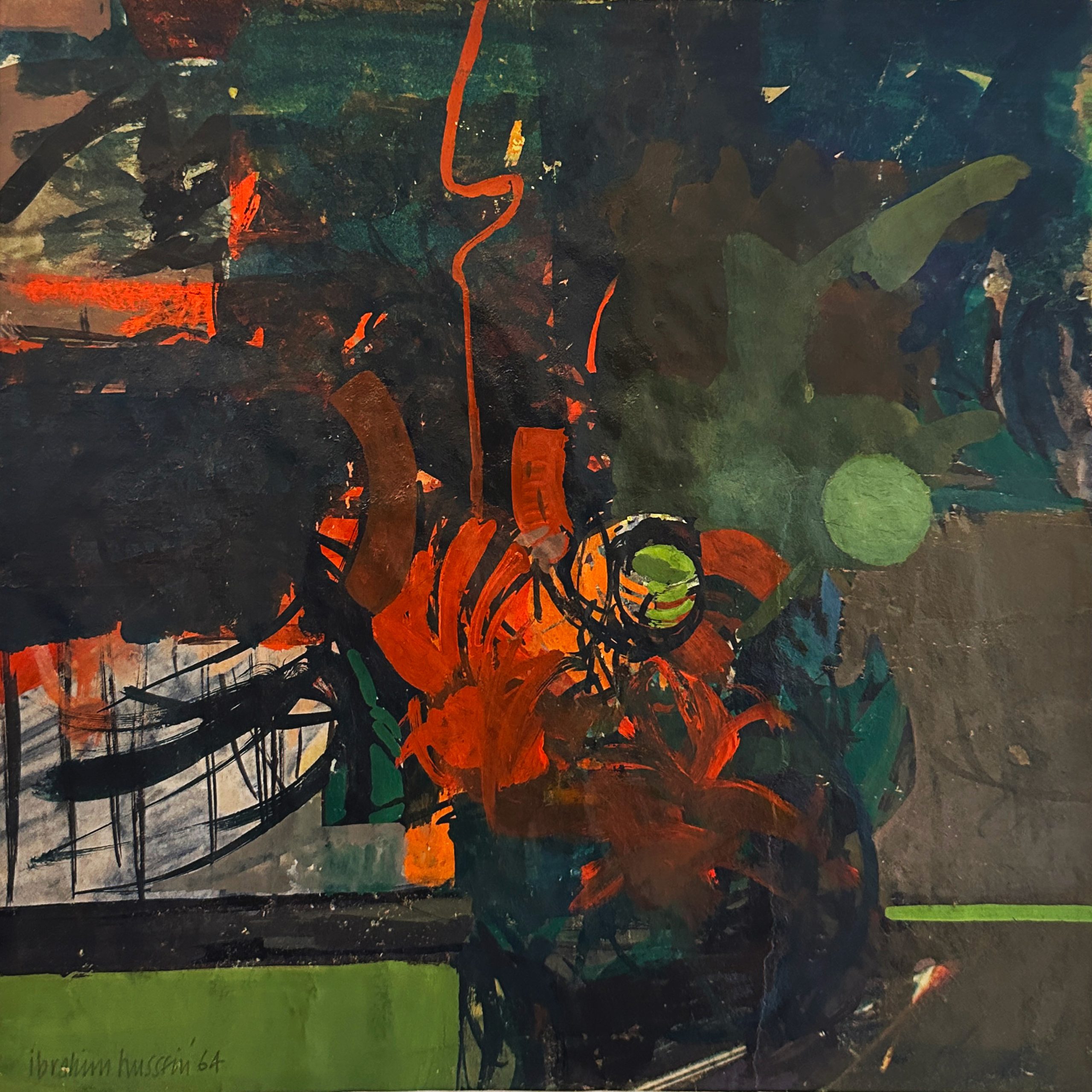
The early works of Ibrahim Hussein — Mother and Child (1964), The Traveller (1964), Homage (1964), Untitled (1963), Little Commotion (1964), Man with Possessions (1964), and the Rumble Series — form the foundation of modern Malaysian art. These paintings are more than historical milestones; they are emotional records of a young artist’s journey toward identity and meaning. Each work reflects the tension and harmony of a nation in transition, a society balancing tradition with modernity, and an individual seeking universality through deeply personal experience.
In later years, Ibrahim would describe his art as “the translation of man’s inner motion.” That conviction is already present in the brushstrokes and lines of his early creations, where form and feeling merge seamlessly. These works remain timeless tributes to creativity, movement, and spirit. Ibrahim Hussein’s early vision continues to inspire, reminding us that true art transcends form and time. It is, at its core, a reflection of life itself—always moving, always searching, always alive.